Contact us for Information and Pricing
Get expert advice and tailored solutions for your research needs
Contact us for Information and Pricing
Get expert advice and tailored solutions for your research needs
2025 • ACS Electrochemistry 2025, 1, 6, 962–973
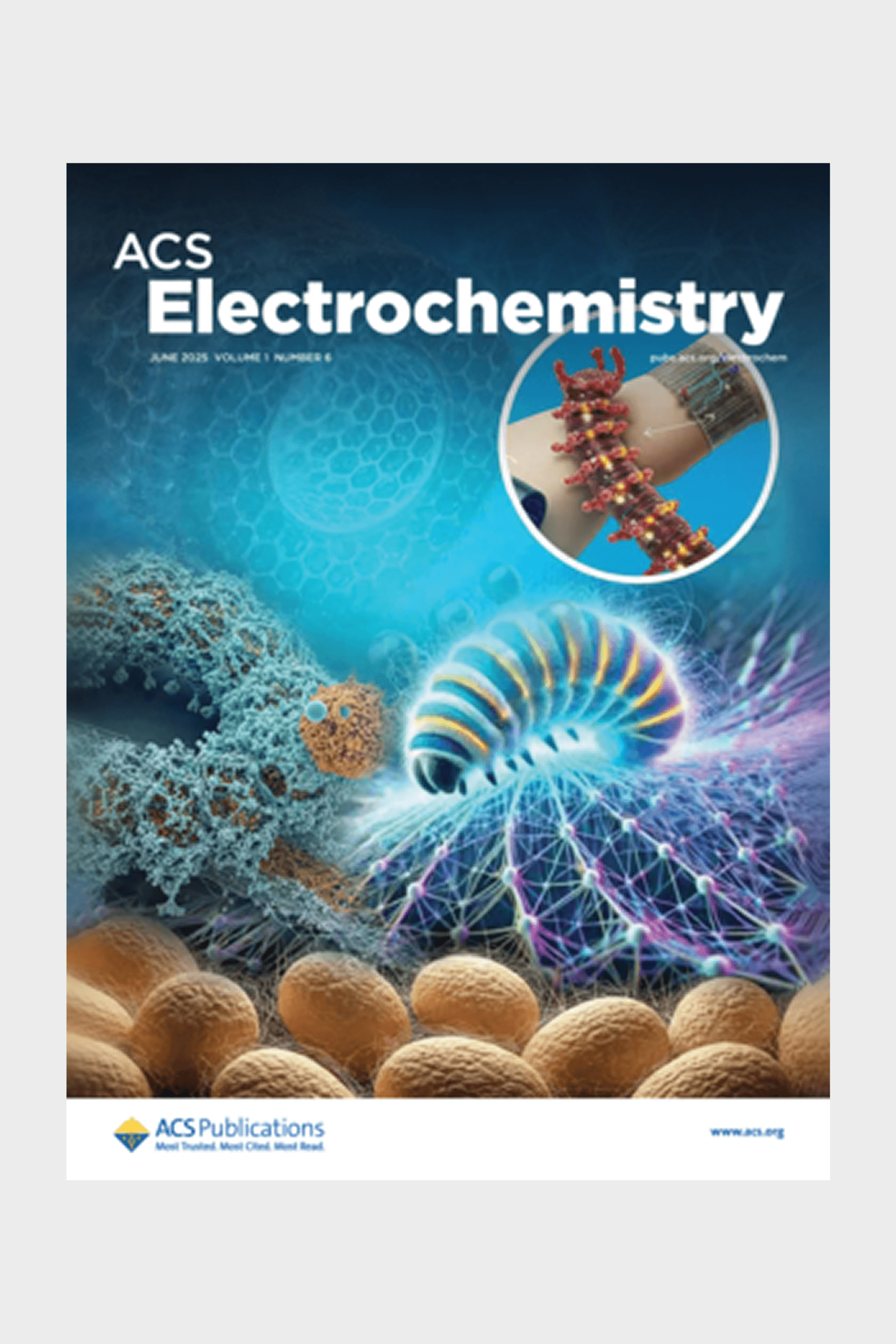
Silicon nitride (SiNx), a conversion-alloying lithium-ion battery electrode with excellent potential to replace silicon and graphite anodes, offers improved cycle stability and fast-charging capabilities. During the formation cycle(s), SiNx irreversibly converts into a mixture of lithiated silicon and nitridosilicate matrix. However, beyond this basic understanding, there is limited fundamental insight into how the post-conversion structure results in improved electrochemical performance. This significantly hinders the optimization and commercialization prospects of SiNx anodes. Herein, operando electrochemical atomic force microscopy is used to uncover the morphological and chemo-mechanical changes of SiNx thin films during the conversion reaction. We elucidate that the post-conversion SiNx forms silicon domains embedded within a matrix with a core-shell-like structure comprised of a stiff outer nitridosilicate surface and softer inner Si-rich core. The silicon domains that form have very stable dimensions (∼100 nm in diameter) that, crucially, remain smaller than the critical cracking threshold of silicon. This results in a more mechanically robust anode, anticipated to be free from the adverse effects of cracking, pulverization, and subsequent capacity fade. Our work marks an important advance in the fundamental understanding of silicon nitride anodes and offers a pathway to their incorporation into next-generation batteries.
Adam J. Lovett*, Máté Füredi, Liam Bird, Samia Said, Brandon Frost, Paul R. Shearing, Stefan Guldin, Thomas S. Miller*
See our related products to this publication: